 The Bridge Builder’s Advantage: Ancient Engineering Wisdom for Modern Business Strategy">
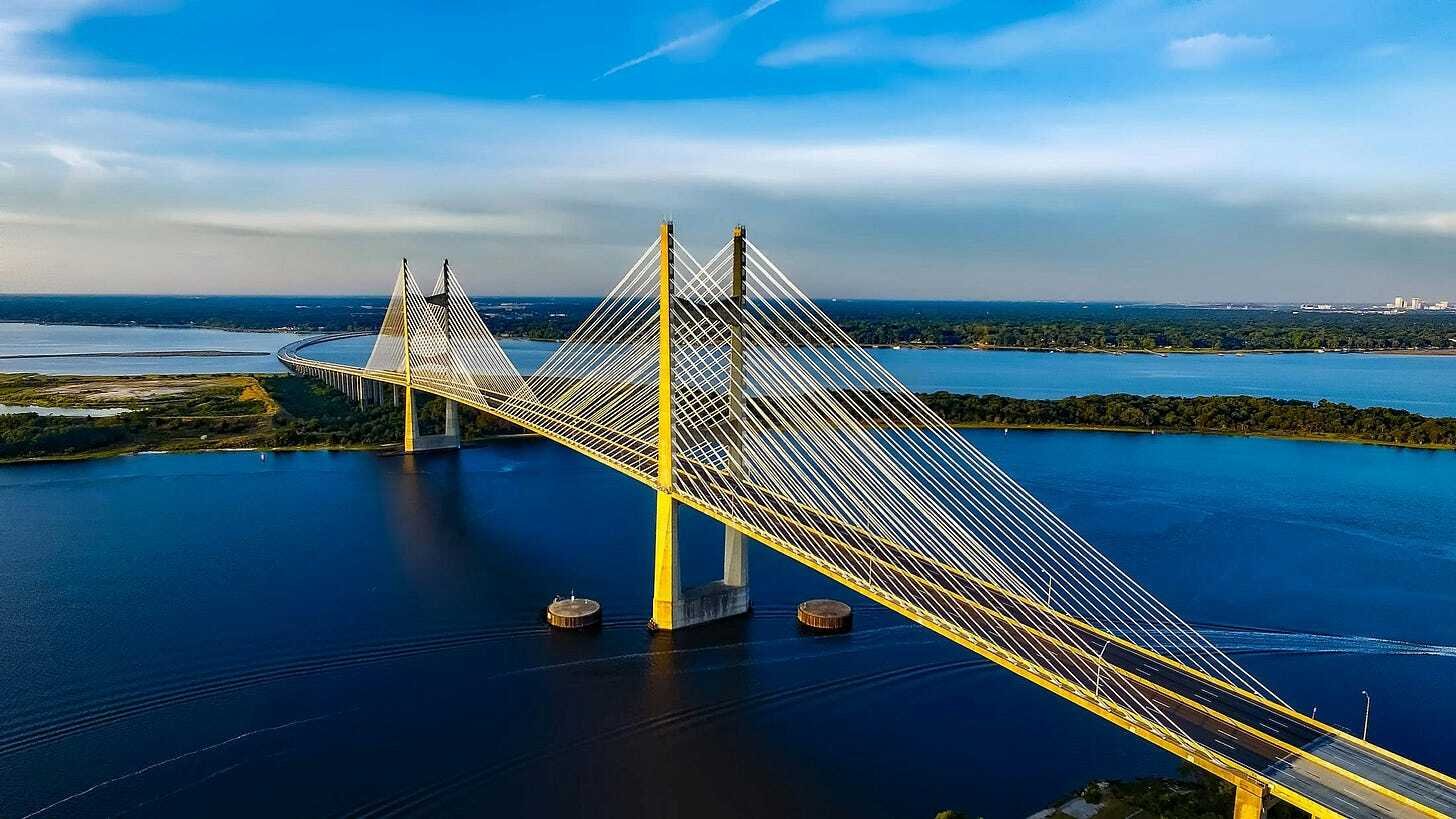
Photo by Pixabay: https://www.pexels.com/photo/aerial-view-photography-of-bridge-220762/
Introduction: While Others Chase Innovation, the Greats Connect It
In 50 AD, Roman engineers built the Pont du Gard—not just to transport water, but to secure an empire’s future.
By connecting vital resources and regions, they created an enduring strategic advantage that compounded over centuries.
Fast forward 2,000 years: digital transformation and AI are reshaping industries. But the logic of durable advantage remains the same.
The most successful companies in history—then and now—aren’t just disruptors.
They’re bridge builders: they create the critical connections others overlook.
From Roman aqueducts to Amazon logistics, the entities that build and control bridges—physical or digital—don’t just participate in markets.
They shape them.
Part I: The Historical Blueprint — How Empires Won with Bridges
🔹 The Economics of Early Infrastructure
The earliest bridges weren’t just marvels of engineering.
They were bets on future dominance.
🛠 The Mesopotamian Model (~2000 BCE)
Simple beam bridges across irrigation canals unlocked agricultural surplus, enabling trade, crafts, and governance.
🧠 Modern takeaway: Build foundational systems that free others to specialize.
🛡 The Roman Formula for Strategic Bridges
Romans used infrastructure with military precision:
Control Points → Dominated trade and troop movement
Revenue Generation → Tolls turned bridges into self-funding assets
Network Effects → Each new bridge increased system-wide value
Durability → Built for centuries = compounding ROI
🧠 Modern takeaway: Invest in durable systems that gain power over time.
🔹 The Medieval Lesson: Whoever Owns the Bridge, Owns the Flow
In the Middle Ages, bridge guilds didn’t always have better technology—but they had better positioning.
The London Bridge, inhabited and commercialized for 600+ years, wasn’t just a road—it was an economic magnet.
“The bridge builder captures value from both sides of the connection—and from the increased activity they enable.”
🧠 Modern takeaway: The junction is where the value concentrates.
Part II: The Bridge Builder’s Strategic Framework
Across history and industries, strategic bridges share four universal principles:
🧱 1. Identify the Critical Gap
Ancient: Romans built bridges at natural trade choke points
Modern: Spot where connection is missing in your market
AI Lens: Where are humans and machines still poorly linked? Where is data siloed?
🌐 2. Design for Network Effects
Ancient: Every Roman bridge made the road system stronger
Modern: Build products that grow more valuable with usage
AI Lens: Create AI systems that learn and improve with scale
🛂 3. Control the Choke Point
Ancient: Medieval bridges became commerce toll booths
Modern: Be the default interface between supply & demand
AI Lens: Become the must-have gateway between human need and machine insight
🏗 4. Build for Permanence
Ancient: Roman bridges lasted millennia
Modern: Create ecosystem lock-in and switching costs
AI Lens: Build systems that get better with each interaction
🔄 The 4 Bridge Types Every Business Can Build
Bridge Type
Modern Example
AI Opportunity
Data Bridge
Salesforce connects customer data across orgs
AI unifies siloed data for insight and automation
Process Bridge
Amazon connects manufacturer to doorstep
AI automates entire fulfillment chains
Knowledge Bridge
Google connects questions to answers
AI bridges human intuition to machine analysis
Cultural Bridge
Uber connects riders and drivers across regions
AI translates across language & custom boundaries
Part III: The AI-Era Bridge Builder’s Playbook
To build durable AI-era companies, leaders must master the new rules of bridge-building.
🔁 1. Build Bi-Directional Value
Bridges serve both sides.
Ask:
Does every party benefit more by participating? Or are you just extracting?
📈 2. Design for Exponential Returns
Physical bridges = linear ROI.
Digital bridges = exponential AI learning loops.
Ask:
Does usage generate data? Does data improve outcomes?
🧩 3. Create Switching Costs Through Integration
Roman roads weren’t bridges—they were systems.
Ask:
If your bridge disappeared, what else breaks? What can only run because of you?
🔁 4. Plan for Evolution
Unlike stone bridges, digital infrastructure must evolve.
Ask:
Can your connection adapt to new interfaces, markets, and needs?
🧪 Implementation Framework: Your Bridge Audit
Use this as a self-assessment:
Question
Score (1–5)
Can you clearly identify your market’s biggest connection gaps?
Are you naturally positioned between disconnected parties?
Do you have assets (data, trust, AI, infra) to bridge the gap?
Can you launch a minimum viable bridge quickly?
Will your bridge grow smarter and more essential over time?
Total:
🟢 18–25 = You’re ready to build bridges and scale
🟡 12–17 = Refine strategy and test with MVP
🔴 <12 = Step back and identify root disconnections first
Part IV: Case Studies — Bridge Builders in Action
🛍 Amazon: The Commerce Bridge
Old Gap: Fragmented supply & unpredictable delivery
Bridge: Connected global supply to individual demand
AI Power: Predicts intent, optimizes logistics, reduces friction
📊 Salesforce: The Data Bridge
Old Gap: Customer data trapped in departmental silos
Bridge: Unified CRM across organizations
AI Power: Einstein AI predicts behavior and next actions
⚡️ Tesla: The Tech Bridge
Old Gap: EV tech lacked performance & infrastructure
Bridge: Made EVs aspirational and usable
AI Power: Bridges human drivers and autonomous systems
🧬 Bonus: Plaid & Zapier
Plaid: Connected banks and fintech with a seamless API layer
Zapier: Enabled no-code bridges across SaaS apps
Both prove you don’t need to be massive—you just need to be essential.
Conclusion: The Enduring Power of Strategic Connection
“The best bridges don’t just move people—they move history.”
Today’s most successful businesses don’t merely cross bridges—they build them.
And in doing so, they don’t just solve today’s inefficiencies—
they unlock entirely new industries, ecosystems, and economies.
In an AI-powered world, the future belongs to the bridge builders.
So the question becomes:
🧩 What gap exists in your world that only you can connect?
🎯 What bridge can you build that changes the flow of value forever?
Final Thought
The most powerful businesses don’t disrupt. They connect.
Build the right bridge, and you won’t just gain market share.
You’ll gain leverage that compounds for decades.